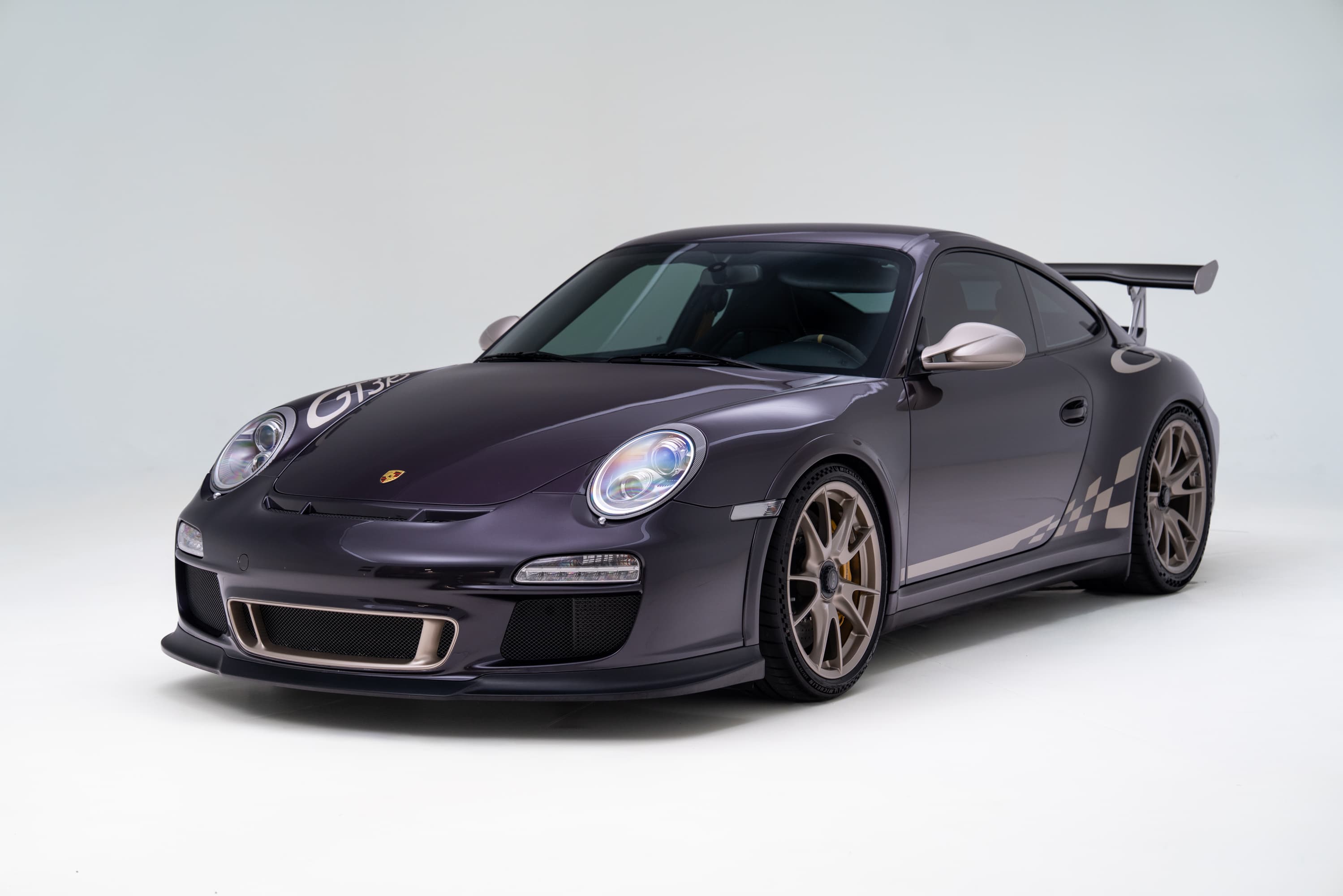
The 997.2 Porsche 911 GT3 RS occupies a unique and increasingly important position within Porsche’s Rennsport lineage. While later RS models introduced PDK, active aerodynamics, and extensive electronic intervention, the 997 generation sits in a rare middle ground. It is modern enough to be genuinely usable on the road, yet still fundamentally analog in its operation, free from electrically assisted steering and complex driver aids. In fact, this was also the final GT3 RS with hydraulic steering.
Power comes from the legendary Mezger-derived 3.8-liter naturally aspirated flat six, making 450 horsepower and revving to over 8,000 rpm with unmistakable mechanical clarity. This engine represents the final evolution of Porsche’s race-bred Mezger architecture in a road-going RS, offering throttle response, durability, and character that later direct-injection units would not replicate. Paired exclusively with a close-ratio six-speed manual transmission, shorter gearing, and a single-mass flywheel and rear wheel drive, the 997.2 GT3 RS delivers one of the most engaging drivetrains Porsche has ever offered in a street-legal car. 60 mph comes up in ~3.8 seconds, the top speed is rated at 194 mph, along with a sub-7:30 Nürburgring time.
While the specification sheet may suggest modest gains over the standard 997 GT3, the RS package transformed the car dynamically, besides weight-saving measures amounting to ~50 pounds. The wider Carrera 4-based body shell allowed for a significantly broader rear track, revised wheel carriers, and motorsport-derived suspension components taken directly from Porsche’s GT racing program. Aerodynamics were meaningfully advanced, with the 997.2 RS producing substantially more downforce than its predecessor, thanks to a taller and wider rear wing and revised underbody airflow management.
These changes resulted in a car that should feel more planted, more stable at speed, and more communicative at the limit, all without sacrificing road usability. Crucially, the 997.2 GT3 RS avoided the extremes of earlier air-cooled RS models that demanded constant attention at low speeds, while also sidestepping the complexity of later generations.
This particular 2010 example finished in Carrera White, Red RS decals, a black leather interior with Guards Red highlights, and silver center-lock wheels has 17,976 miles on the clock, and benefits from a clean CARFAX history and consistent maintenance by Porsche dealers and respected specialists. Ownership history reflects enthusiastic stewardship across multiple states, but the car remains mechanically unmodified, preserving its factory RS specification. A full-body paint protection film has been applied to maintain the integrity of the original Carrera White finish.
Alongside the 996 GT3 RS and 997.1 GT3 RS, the 997.2 is now widely regarded as a modern classic Rennsport model, bridging the gap between air-cooled icons and today’s digitally enhanced RS cars. Production numbers further highlight the significance of this model. With anywhere between 1,500-2,000 examples produced worldwide, of which 541 are believed to have made it stateside, the 997.2 GT3 RS is substantially rarer than later RS models, and even rarer than the 991.1 GT3 RS by a considerable margin.
As collectors increasingly reassess the value of analog engagement, Mezger engines, and manual-only RS cars, the 997.2 GT3 RS is emerging from a long period of relative underappreciation. Its rarity, engineering depth, and position within Porsche’s Rennsport evolution make it one of the most compelling modern RS models available today.





Comments and Questions